


Chapter 01 / 06
Specify the mobile job first
Describe where, how often and under what connectivity the app is used. A field-service tool with offline photos and synchronization has different risks from a content app with online reading. Identify required camera, location, Bluetooth, notification and background behavior before estimating implementation.
List the supported devices and operating-system baseline. iOS and Android have distinct permissions, conventions and release processes. A shared framework can reduce duplicated UI work, but the acceptance criteria must still cover the intended platforms.
| Approach | Useful fit | Work that remains |
|---|---|---|
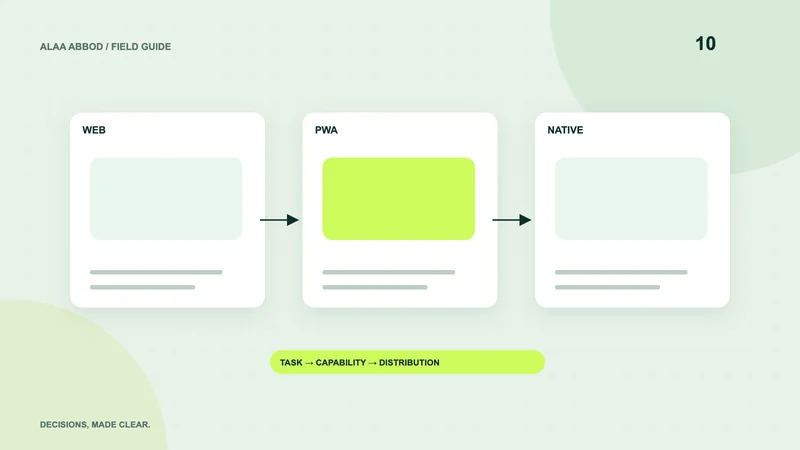
| Native iOS / Android | Deep device integration or platform-specific experience | Separate platform expertise and QA |
| Flutter | Shared interface with suitable team experience | Plugins, platform behavior and device validation |
| React Native | Shared mobile app with a JavaScript/React team | Native integrations and platform-specific code |
| Mobile web / PWA | Link-based tasks and broad access | Browser capability and installation limits |
Chapter 02 / 06
Budget the backend that the interface depends on
Accounts, permissions, storage, search, payments and notifications are not free because their screens look simple. Define which logic belongs on the server and how it handles retries, duplicates and invalid requests. A payment button also needs a reconciled transaction state.
Plan account recovery, support and data deletion. If multiple companies share the service, test organizational separation. Define offline conflict resolution rather than promising synchronization without deciding what happens when two devices edit the same record.
Chapter 03 / 06
Calculate a scenario with explicit exclusions
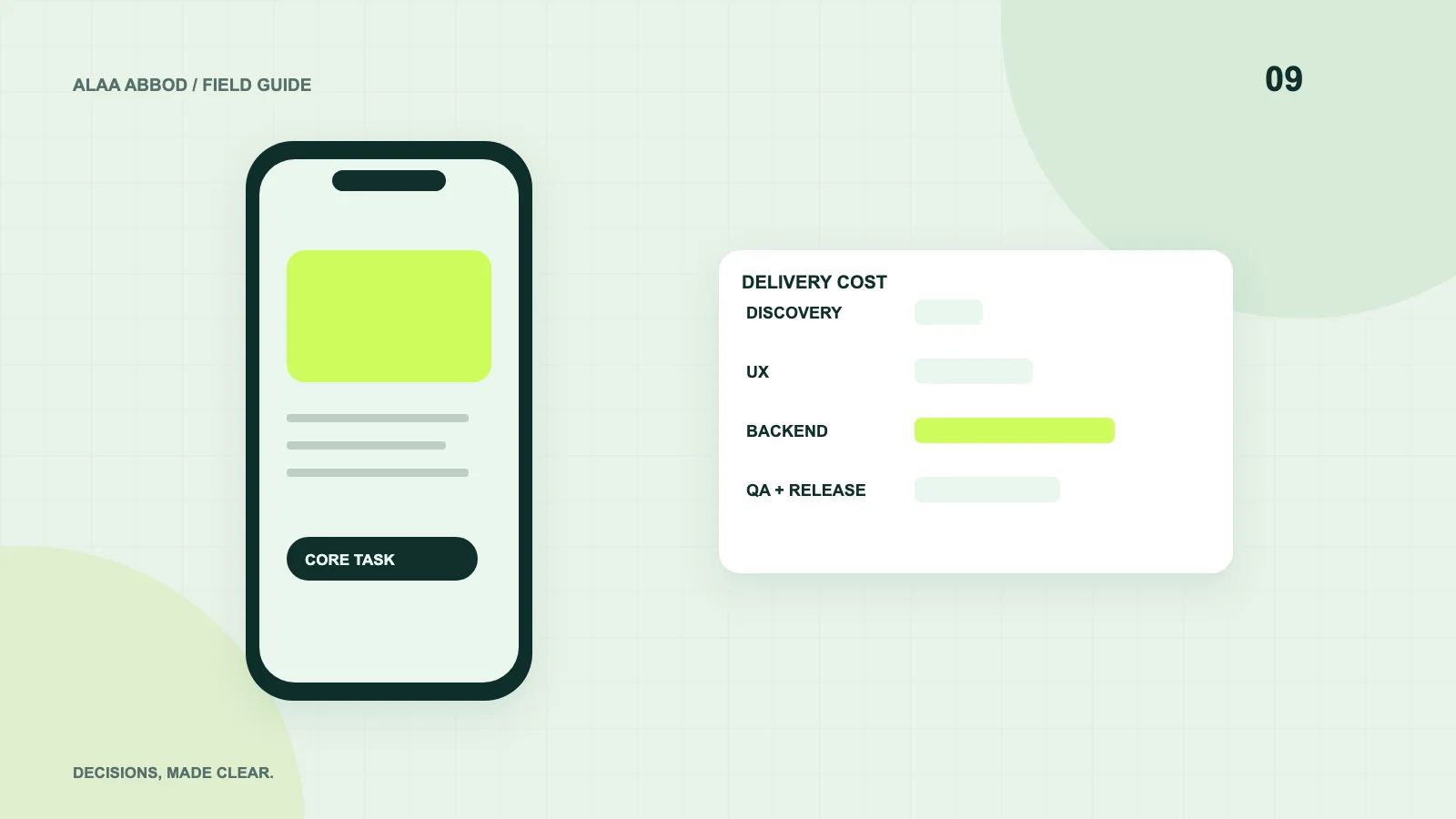
Assume 50 hours of discovery, 80 of design, 220 of mobile implementation, 140 of backend work, 100 of QA and 30 of release preparation. The illustrative total is 620 hours, or €62,000 net at an assumed €100/hour. It is a planning scenario, not an app market average or Abbod quote.
It excludes complex offline synchronization, migration, specialist hardware, regulated workflows and external service charges. Removing the second platform may reduce some work but does not halve discovery, backend and release preparation. Reuse is a deliverable to verify, not a percentage to assume.
| Work package | Hours |
|---|---|
| Discovery | 50 |
| Design | 80 |
| Mobile implementation | 220 |
| Backend | 140 |
| QA | 100 |
| Release preparation | 30 |
Chapter 04 / 06
Store release is a project stage
Keep developer accounts under the company’s ownership and provide the information reviewers need. Test permissions, login, purchases and unavailable services. Prepare accurate screenshots, descriptions, support and privacy information. Review current platform requirements before submission.
A rejected submission may require product changes rather than a new screenshot. Schedule room for the review process without promising an approval date you do not control. Distribute internal builds early enough for stakeholders to test on actual devices.
Chapter 05 / 06
QA needs devices and failure scenarios
Test interrupted networks, expired sessions, empty lists, large text, denied permissions and repeated taps. Check accessibility and screen-reader behavior as well as visual consistency. A simulator is useful but cannot replace all device tests.
For multilingual apps, test German label expansion and Arabic direction, mixed text and keyboard behavior. Keep the translation model connected to product states so that an error message does not stay English when the rest of the screen changes language.
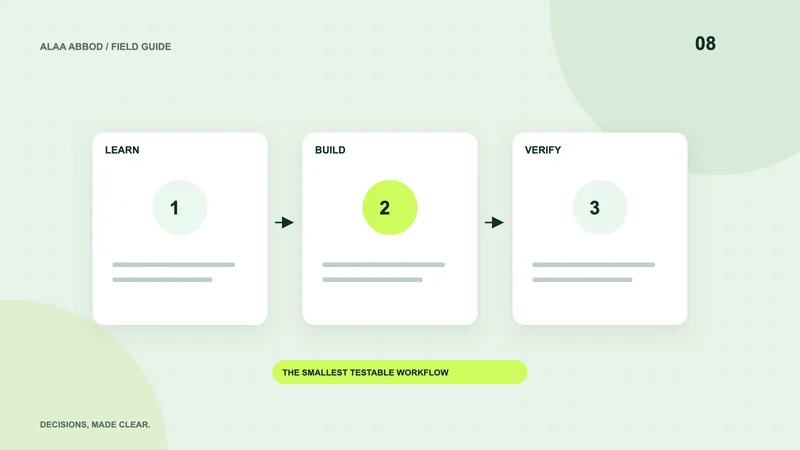
- Task Define the core mobile workflow and operating environment.
- Capability Prove the riskiest device or offline requirement.
- Plan Scope backend, platforms, QA and distribution.
- Maintain Assign monitoring, updates and incident responsibility.
Chapter 06 / 06
Plan maintenance as continuing product work
Operating-system changes, dependency updates, store requirements and service incidents create ongoing work. A maintenance agreement should distinguish fixes, compatibility work and new features. Include monitoring and a tested recovery path for backend failures.
Review usage and support requests after launch. Invest in the next feature because it improves the core task, not because it fills an empty roadmap. If a link-based web experience already serves that task, consider whether a mobile app adds enough value to justify its separate operation.
For implementation: Explore the relevant service.