


Chapter 01 / 06
Define the order before the storefront
A store is a chain of promises: available product, correct price, accepted payment, dispatched order and a workable return. A beautiful product page can still create expensive support work if inventory or delivery information is unreliable. Start by documenting what happens after the buyer pays.
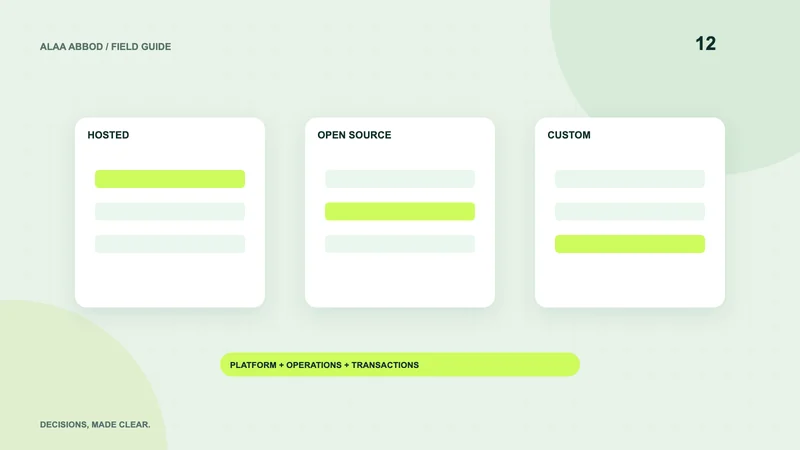
Record product variants, stock ownership, payment methods, shipment rules, markets and returns. Identify the system that owns each fact. A spreadsheet can be sufficient for a small catalog when responsibility is clear; a custom integration is useful only when it removes a real operating bottleneck.
| Area | Bounded first release | Higher complexity |
|---|---|---|
| Catalog | Consistent product data and a few variants | Incomplete data, configurable bundles or many variant rules |
| Checkout | Supported payment and shipping rules | Subscriptions, marketplace payouts or unusual tax logic |
| Operations | Documented manual fulfillment | ERP, warehouse and real-time inventory integrations |
| Markets | One language and shipping market | Localized catalogs, currencies and regional terms |
| Customer service | Clear support and returns workflow | Account-specific policies and approval processes |
Chapter 02 / 06
An illustrative German project budget
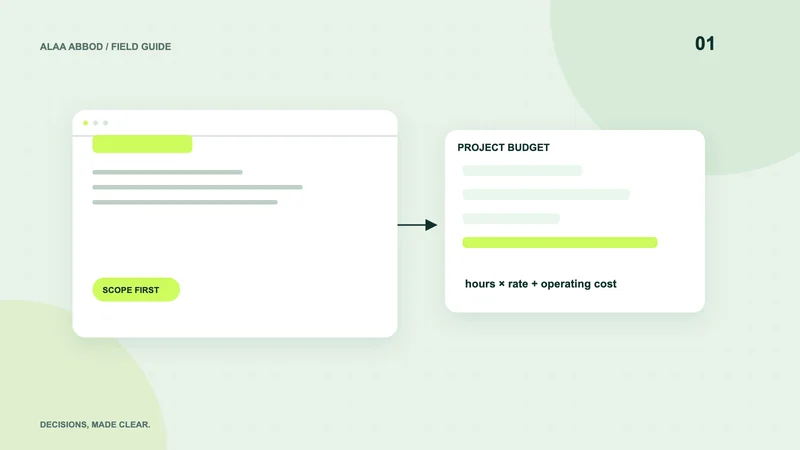
Assume 100 EUR per hour solely to make the calculation transparent. Discovery and scope could take 12–20 hours, UX and visual adaptation 20–32, catalog and storefront implementation 32–56, checkout and integrations 20–36, and testing and handover 16–24. That example totals 100–168 hours, or 10,000–16,800 EUR before VAT.
These are planning assumptions, not German market averages or Alaa’s fixed prices. They exclude paid themes, extensions, subscription fees, payment fees, copy, photography and legal advice. A ready-made theme with excellent product data can reduce work; complex operating rules can exceed the model quickly.
| Work package | Assumed hours | Calculated amount |
|---|---|---|
| Discovery and scope | 12–20 | 1,200–2,000 EUR |
| UX and visual adaptation | 20–32 | 2,000–3,200 EUR |
| Catalog and storefront | 32–56 | 3,200–5,600 EUR |
| Checkout and integrations | 20–36 | 2,000–3,600 EUR |
| QA and handover | 16–24 | 1,600–2,400 EUR |
| Total | 100–168 | 10,000–16,800 EUR |
Chapter 03 / 06
Payment success is not a browser message
Do not fulfill an order merely because a visitor reaches a success page. The server needs a trusted payment state. Payment providers can retry events or deliver duplicates; the order workflow must verify the event and avoid creating the same fulfillment twice.
Use the provider’s documented signature verification and retry behavior. Test canceled payment, delayed confirmation, duplicate notification, refund and changed stock. The business needs to know which states trigger shipment and which require manual review. These checks belong in the implementation estimate.
Chapter 04 / 06
Calculate recurring costs against your own sales
Platform subscriptions are only one line. Add extensions, hosting where applicable, maintenance, payment processing, content upkeep and operational support. Use current provider terms for your region and chosen plan; annual and monthly billing can produce different headline prices.
Model low, expected and high order volumes with your own average basket and payment mix. Do not combine all payment costs into a single advertised percentage without checking fixed components and additional platform fees. A cheaper subscription may not be the cheaper operating model at your volume.
- Launch
- Design, implementation, product preparation and acceptance.
- Operation
- Subscriptions, hosting, maintenance and staff time.
- Transactions
- Payment fees and any plan-dependent third-party transaction charges.
Chapter 05 / 06
Prepare the catalog before asking for a quote
Provide a sample of real products, including the awkward ones. Show variants, shipping weight, images, descriptions, tax treatment and inventory source. Five representative records reveal more implementation risk than a promise that all products will be simple.
For a relaunch, include existing URLs and search data. Plan redirects and product availability changes. Public product pages need understandable content and accessible purchase controls; applicable German accessibility duties must be assessed for the actual service and business, including exemptions.
Chapter 06 / 06
Accept the shop through a real purchase journey
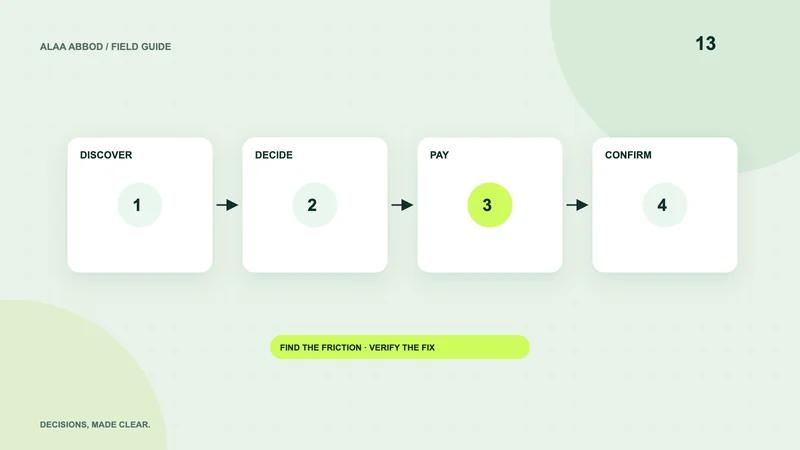
Agree one test order from product discovery to confirmation, fulfillment and a return or refund. Repeat it on a phone, with keyboard access, failed payment and an unavailable item. Check transactional email, tax and shipping outputs with the responsible business owner.
The handover should include account ownership, deployment or theme access, extension renewals, backup procedures and a support contact. Request a proposal that connects each deliverable to a working part of this journey, rather than a list of attractive pages.
- Catalog sample Share representative products and variants.
- Operating map Name the owners of inventory, payment, shipping and support.
- Release boundary Choose launch markets and integrations.
- Acceptance Agree the complete test order and handover.
For implementation: Explore the relevant service.