


Chapter 01 / 06
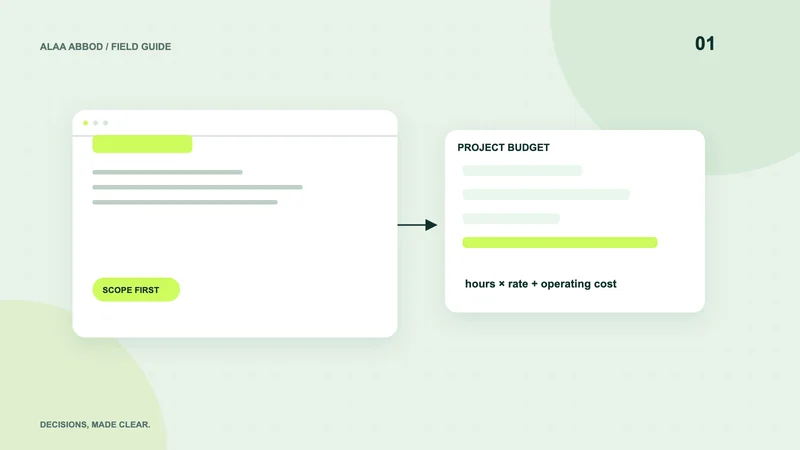
Choose the job of the first release
A site cannot validate every part of a startup at once. Write down who arrives, what they already know, what doubt stops them and what action advances the business. For a founder selling to operations teams, that action might be a short qualification call rather than an immediate account signup.
An MVP website is a small complete buying journey, not an unfinished collection of pages. It needs an understandable promise, the intended buyer, the product’s current state, evidence and a working contact route. If there is no live product yet, say that clearly and invite an interview or waiting-list request without pretending a demo is available.
| Stage | Primary question | Useful action |
|---|---|---|
| Discovery | Is this problem worth solving? | Request a customer interview |
| Pilot | Can this work in our situation? | Discuss a bounded pilot |
| Sales | Why choose this over the alternative? | Book a qualified product demo |
| Expansion | Can we operate across teams or markets? | Explore implementation and support |
Chapter 02 / 06
Explain the offer before polishing the animation
Use the opening to connect the buyer, the problem and the outcome. A SaaS team could explain how a purchasing manager approves supplier requests without a spreadsheet handover. That is more concrete than an unsupported promise to transform procurement.
Show the actual workflow, with screenshots or an annotated prototype. Explain limits and dependencies. An attractive visual earns attention; a clear explanation earns the right conversation. Keep motion subordinate to the reading order and respect reduced-motion settings.
Chapter 03 / 06
Trust without invented traction
Early teams rarely have a long list of case studies. Use verifiable team experience, a transparent pilot process, product limitations and specific implementation details. Do not turn a concept project into a customer success story or invent logos, users and percentage improvements.
Give procurement readers a path to security, data handling and support information. Give investors a concise company route and candidates an honest account of the role and working environment. A founder inbox should not be the only navigation mechanism for three different audiences.
- Product
- Show a real workflow and explain what is implemented.
- People
- Identify the responsible team and how to contact them.
- Process
- State pilot scope, success criteria and the next decision.
Chapter 04 / 06
Conversion and analytics should meet in the same place
Use one primary CTA per journey and name the next step accurately. A request for pricing should not silently become a sales newsletter subscription. Ask only for the information needed to respond; protect the form on the server and make errors understandable.
Measure accepted enquiries and downstream qualification, not just button clicks. Before installing advertising or analytics scripts in Germany, assess the applicable privacy and consent requirements. Test the form, confirmation and inbox delivery together. A clicked submit button is not evidence that an enquiry arrived.
Chapter 05 / 06
Keep the first website fast and able to grow
Choose a publishing system the team can actually operate. A static site can be excellent for a small, controlled release; a CMS helps a team publishing frequently. Neither choice removes the need for crawlable content, sensible headings, good images and ownership of domain and hosting accounts.
Create reusable page types for product, use case and article content. Start with a focused sitemap and add pages when they answer a new buying question. Avoid duplicating nearly identical city pages or generating a large blog before somebody owns editorial quality.
- Brief Customer, doubt, proof and next action.
- Build Working journey, lightweight visuals and reliable form.
- Learn Review qualified conversations and fix the largest friction.
Chapter 06 / 06
A launch review the founder can use
Ask a person outside the team to explain the product after reading the first screen. Then ask them to find a use case, identify the company and contact it on a phone. Watch where they hesitate; do not coach them through the page.
After launch, review objections from sales calls against the site’s answers. Add useful evidence before adding decorative sections. Revisit investor and recruiting pages when their needs actually change, and keep the product’s published state accurate.
For implementation: Explore the relevant service.